
Test scope, screenshots, checkpoint findings and tier rationale were supplied by an identified reviewer. Identity is retained internally unless public attribution is explicitly enabled.
EdTech · South AfricaFull evidence record
Thuto.io
Thuto.io is a South African learning app combining academic support, incentives or gamification and financial-literacy features for learners.
Sandbox Africa checked the submitted evidence and promoted the verified checkpoint record. Any visible adjustment is identified rather than silently rewritten.
The official public tier and technical record below are the verified publication outcome.
Tier 2 — Market-Ready
Keep Tier 2. Direct learner workflow evidence and a current product support market readiness; the evidence does not support Tier 3 enterprise maturity.
Strongest supporting evidence
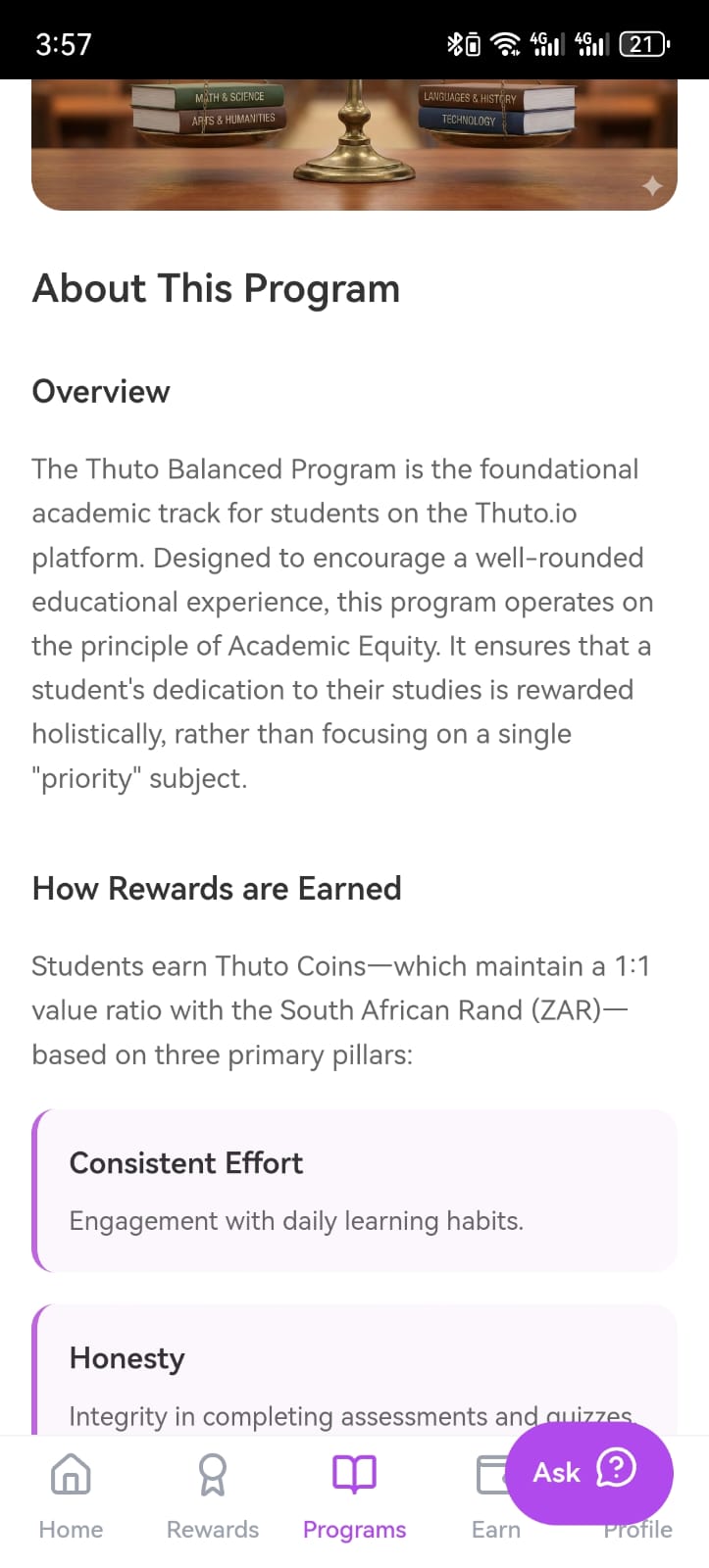
User registration was available and functional. The dashboard provided visible Thuto Coins, FQ score and academic progress. 250 FQ points were awarded for signing up, demonstrating that the reward mechanism was operational during testing. The platform presented multiple student-facing components, including learning, rewards, progress, Stories and Tutors. The underlying proposition was coherent: learning → engagement → rewards → progress.
Why the next tier is not yet supported
The next tier is not supported because the testing did not demonstrate a sufficiently low-friction, fully accessible core learning journey.
Verified findings and limitations
Direct review observations
The intern directly tested registration, dashboard, learning/gamification features and user-facing flows, providing stronger evidence than a marketing-site-only assessment.
Independent verification
The current official site remains live and describes Thuto.io as a South African learning app focused on academic improvement and financial literacy.
Observed issues
No critical core-loop failure was established in the submitted assessment.
Testing limitations
External integrations, enterprise administration, formal security assurance and large-scale performance were not independently tested.
Independent verification sources. Source 1
What was actually assessed
Workflow Tested: Learning access and engagement Test Sequence: Access platform → Sign up → View dashboard → Explore partner programme → Assess subscription requirement → Explore lessons → Review rewards/progress → Assess additional services Role used: learner seeking learning resources and opportunities. Left out of scope: Administrator or institutional workflows Educator/tutor operational workflows Back-office or platform-management functionality Technical architecture or source code Security or penetration testing Accessibility compliance against formal standards Business model or financial performance Revenue, funding or market share Internal operational processes Actual university or bursary application outcomes Long-term student retention or engagement metrics Performance at scale Features or functionality that could not be directly observed during testing
Environment / device / browser
Huawei mobile browser
Account or access type
demo student account
Access limitations
Paid features
What was observed
These images formed part of the evidence pack considered during verification. Full-standard records retain the contributor's factual caption for each screenshot.
Seven checkpoint assessment
The verified result is the official public checkpoint record. For earlier-standard reviews, these findings may have been reconstructed from preserved evidence during Sandbox Africa’s 2026 audit; they are not presented as if the contributor originally completed a structured worksheet. Contributor-submitted checkpoint wording is shown only where explicit public reviewer attribution has been enabled.
Step 1 — The Existence & Accessibility Check
Is it live?
Checking for dead links, infinite loading screens, or "Coming Soon" landing pages masquerading as live products.
Sandbox verifiedpass
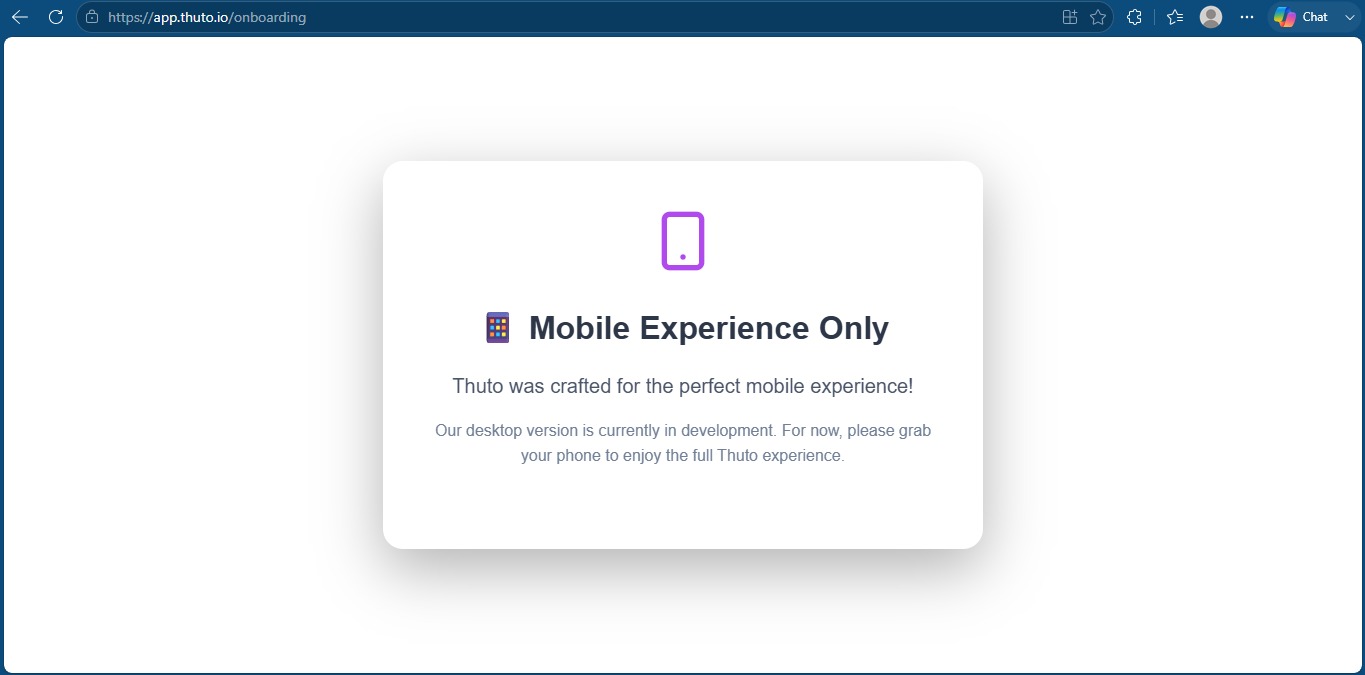
The platform could be accessed and a learner could register, reach the dashboard and interact with visible platform functionality. However, the website indicated that it was undergoing maintenance, requiring mobile access during testing. The tested journey also encountered a functional access constraint: lessons were dependent on a partner programme and subsequent subscription. Editorial proposal adjusted from partial to pass using current independent verification and the established gated-product/safety-critical rules.
Verification adjustmentOnboarding friction
Can a user or enterprise actually sign up, or is it gated behind broken "Contact Sales" forms?
Sandbox verifiedpartial
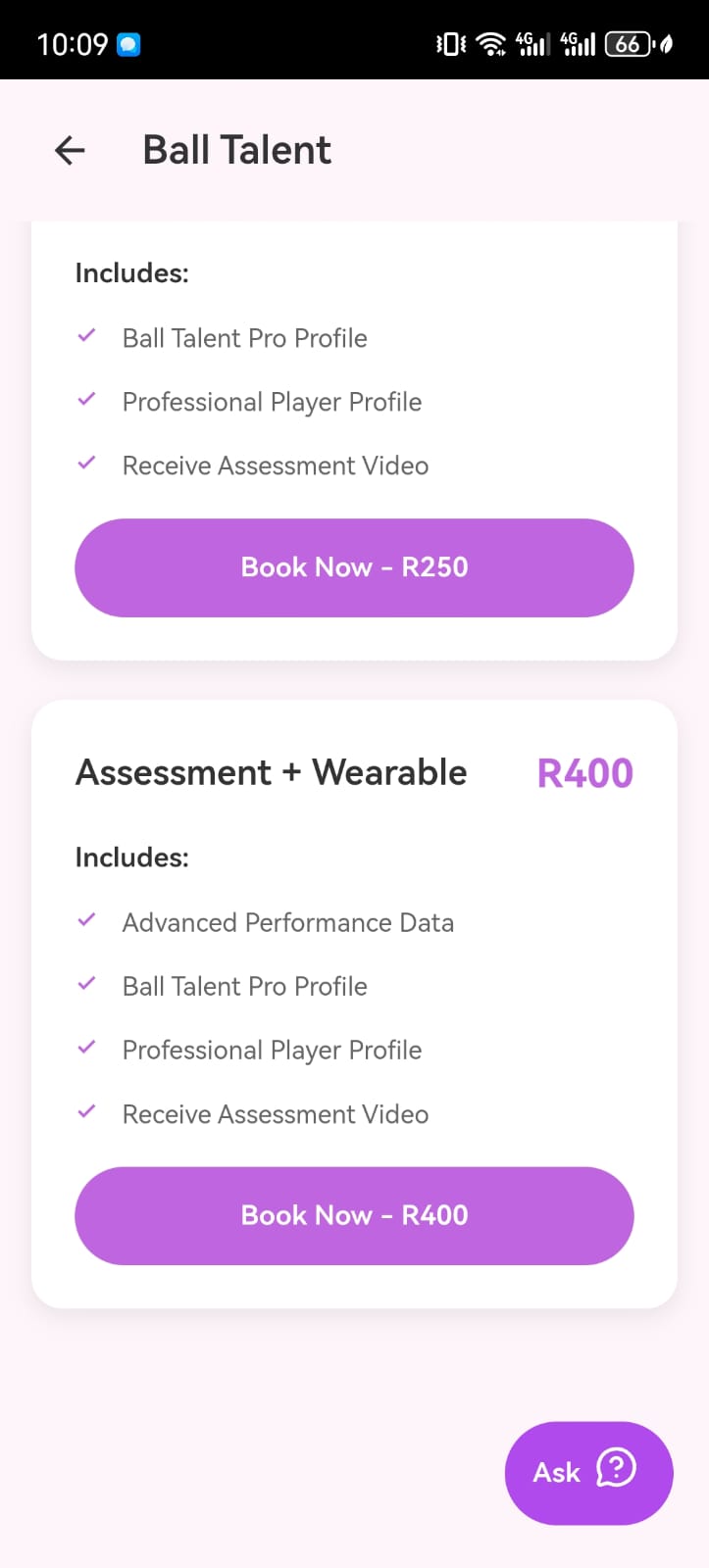
During testing, I could sign up and reach the dashboard. The main issue was not the registration form itself; it was what happened after registration. Accessing lessons required applying to a partner programme, with subscription options of R250 or R400 observed during testing.
Step 2 — Functional Testing (The "Try It Out" Phase)
Core loop execution
Does the application actually do what it claims to do? (e.g. a payment gateway completing a test transaction, a logistics app's routing engine working.)
Sandbox verifiedpartial
the complete learning loop could not be demonstrated as freely as the surrounding engagement features, because lesson access depended on a partner programme and subscription.
User experience (UX) & interface (UI)
Assessing the logical flow, responsiveness, and basic accessibility of the platform.
Sandbox verifiedpartial
Good UX, with medium–high access friction.
Step 3 — Technical & Architectural Assessment
Performance
Load speeds, uptime reliability, and basic stress responses.
Sandbox verifiedpartial
The platform was accessible during testing. The website indicated that it was undergoing maintenance, so mobile access was used. The tested student functions could be accessed and interacted with.
Integration readiness
Availability, clarity, and functionality of API documentation and webhooks.
Sandbox verifiedpartial
Integration readiness not established Editorial proposal adjusted from not_assessed to partial using current independent verification and the established gated-product/safety-critical rules.
Verification adjustmentSecurity basics
SSL certification, basic encryption standards, and data handling transparency.
Sandbox verifiedpartial
Security controls not independently verified Editorial proposal adjusted from not_assessed to partial using current independent verification and the established gated-product/safety-critical rules.
Verification adjustmentCompany right of reply
Claim company profile
Represent Thuto.io?
Claiming verifies company ownership and enables a response or additional evidence. It does not permit editing of the independent review.